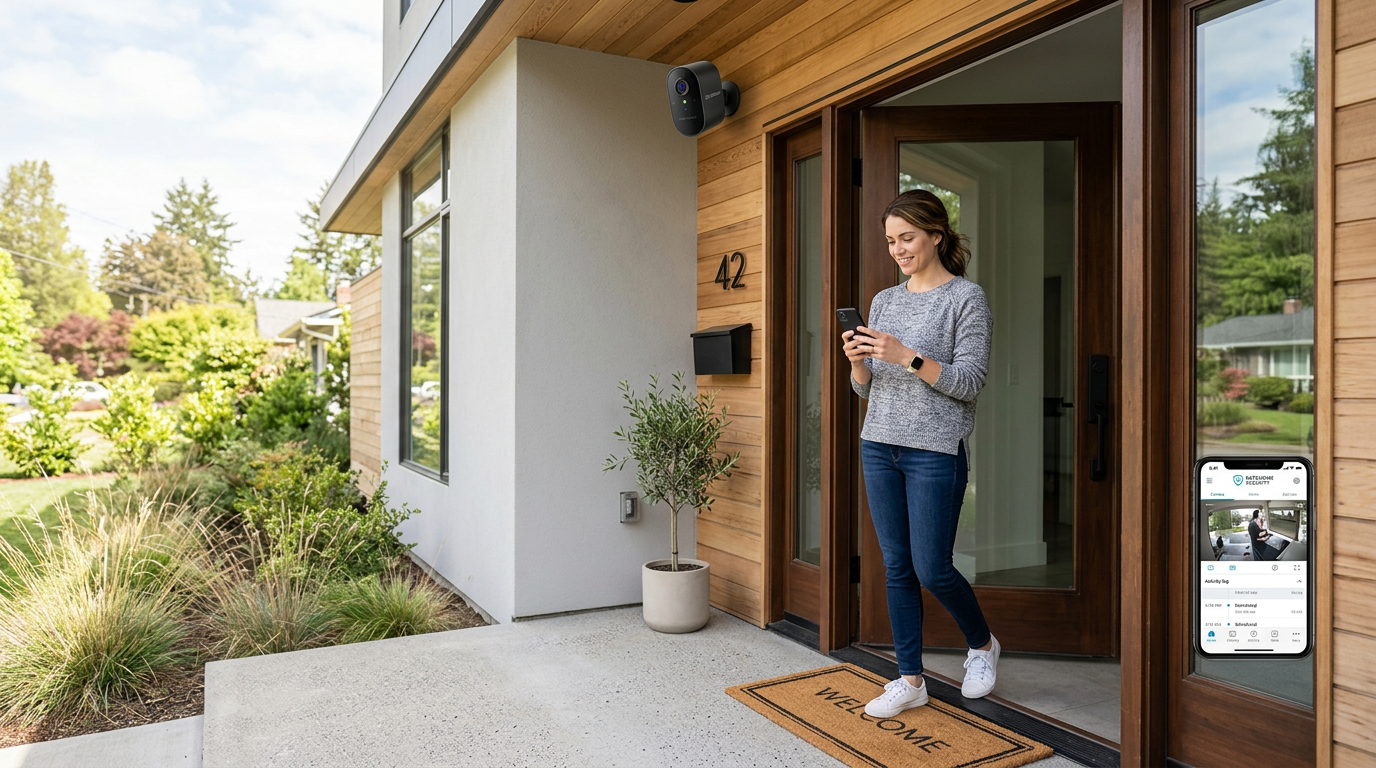
- Front door: Capture visitors, package deliveries, and anyone lingering near the entrance
- Back door: Cover an area that may be less visible from the street
- Side door or gate: Watch secondary access points people might use to avoid the main entrance
Choosing home security cameras is only half the job. Where you place them can make the difference between useful coverage and a system that misses the moments you care about.
Good placement helps you see faces, track movement, and reduce blind spots while still respecting privacy and local rules.
→ Your Homes Connection — Contractor Marketplace — free, takes about 60 seconds.
If you are setting up cameras for the first time, it helps to think in terms of goals: protecting entry points, watching high-traffic areas, and covering the approaches to your home.
The best setup is usually not the one with the most cameras, but the one that covers the most important spaces clearly.
Start with the entry points
Most homeowners begin with the front door, but a complete setup should look at every way someone could enter. That includes doors, accessible windows, attached garages, and any side or back entrances that are out of public view.
A good rule is to place a camera where it can capture a clear view of a person’s face and body as they approach. That often means mounting it high enough to avoid easy tampering, but not so high that faces become hard to identify.
- Front door: Capture visitors, package deliveries, and anyone lingering near the entrance.
- Back door: Cover an area that may be less visible from the street.
- Side door or gate: Watch secondary access points people might use to avoid the main entrance.
- Garage or driveway: Monitor vehicles, garage access, and movement near the home.
For a doorbell camera, the goal is usually a close, head-on view of visitors. For a separate outdoor camera, place it so it includes the door and a bit of the approach path, not just the door itself.
→ See what you could be approved for — free, takes about 60 seconds.
Think about coverage, not just corners
It can be tempting to place cameras in corners because they seem to cover the widest area. That can work, but only if the camera angle still gives you useful detail.
A wide shot is helpful for seeing movement, while a narrower angle may be better for identifying who is there.
In many homes, a mix of views works best. One camera might cover the driveway and front walk, while another looks directly at the front door. Another might watch the backyard or a patio door.
This layered approach helps reduce blind spots without overloading you with unnecessary footage.

No comments:
Post a Comment