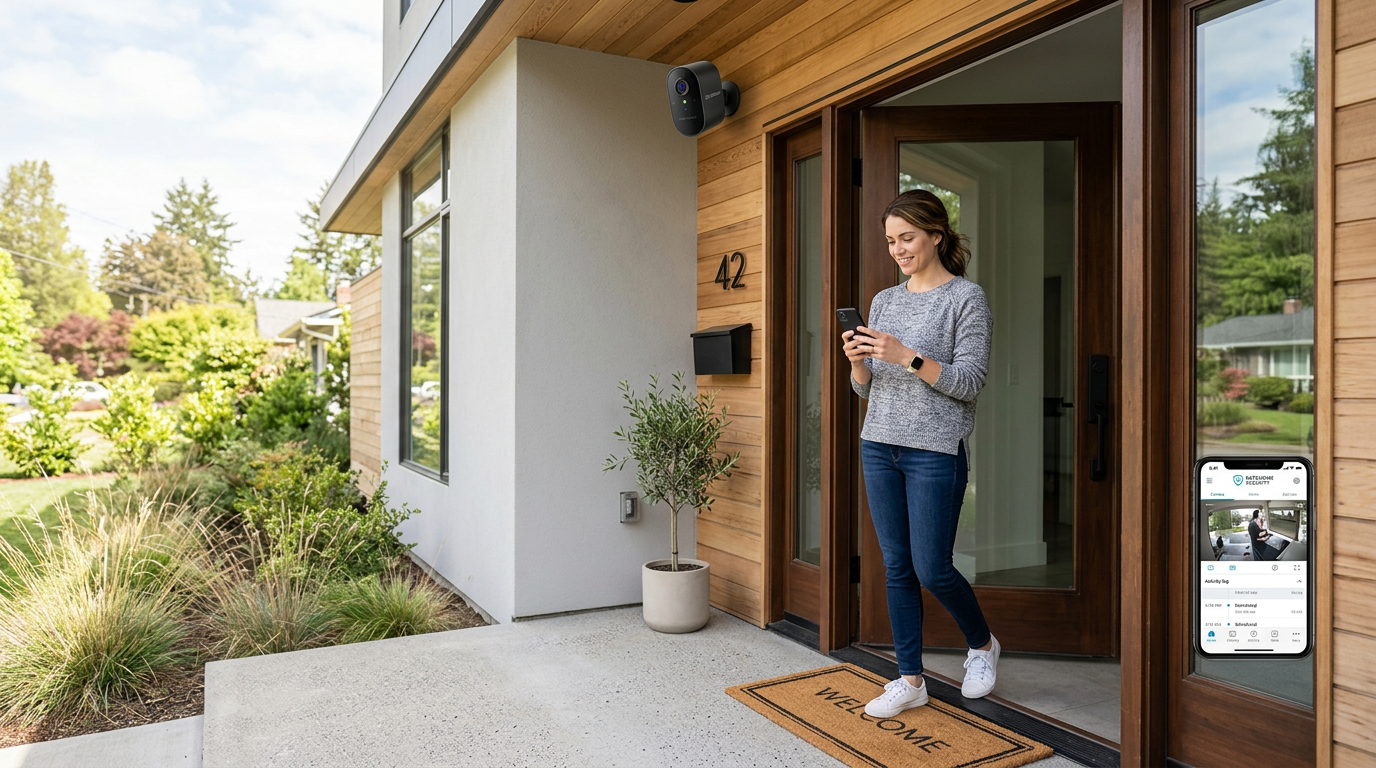
- Look for no-drill mounting options for cameras and keypads
- Check whether window sensors use adhesive rather than screws
- Confirm that any outdoor device can be removed cleanly when you move
If you rent, choosing a home security system is a little different than it is for homeowners. You may need to avoid drilling holes, work around a lease, and plan for moving day.
The good news: there are plenty of security options that can fit an apartment, condo, or house rental without turning your deposit into a guessing game.
→ Your Homes Connection — Contractor Marketplace — free, takes about 60 seconds.
The best setup usually balances three things: how easy it is to install, how well it protects entry points, and whether you can take it with you later.
Before you buy, it helps to think through your lease, your floor plan, and how much control you want over cameras, sensors, and alerts.
Start with your lease and your landlord's rules
Before comparing systems, check what your lease allows. Some landlords are fine with small adhesive sensors and removable cameras. Others have rules about drilling, exterior fixtures, or window hardware.
If you live in an apartment or managed community, there may also be building policies for common areas and doorbell cameras.
It is worth asking one simple question: What can be installed without leaving permanent marks? That answer will quickly narrow your choices.
- Look for no-drill mounting options for cameras and keypads.
- Check whether window sensors use adhesive rather than screws.
- Confirm that any outdoor device can be removed cleanly when you move.
- Ask about permission for devices that face hallways, shared yards, or parking areas.
If you are not sure, get the answer in writing. That can prevent a dispute later if you need to remove equipment or restore the unit to its original condition.
→ See what you could be approved for — free, takes about 60 seconds.
Choose equipment that fits a rental-friendly setup
For renters, wireless systems are usually easier to live with than hardwired ones. They tend to be simpler to install, easier to pack up, and less likely to require a professional visit. That does not mean every wireless system is the right fit, though.
Think about where you need protection and how much coverage you actually want.
Common pieces to consider
- Door and window sensors: Useful for entry points, especially if you have ground-floor access or easy-to-reach windows.
- Indoor cameras: Helpful for checking in on a front door, living area, or package drop zone.
- Video doorbell: Good for renters with a private entry, but less practical if your lease limits exterior changes.
- Motion sensors: Useful in larger apartments, entry halls, or rooms with multiple access points.

No comments:
Post a Comment