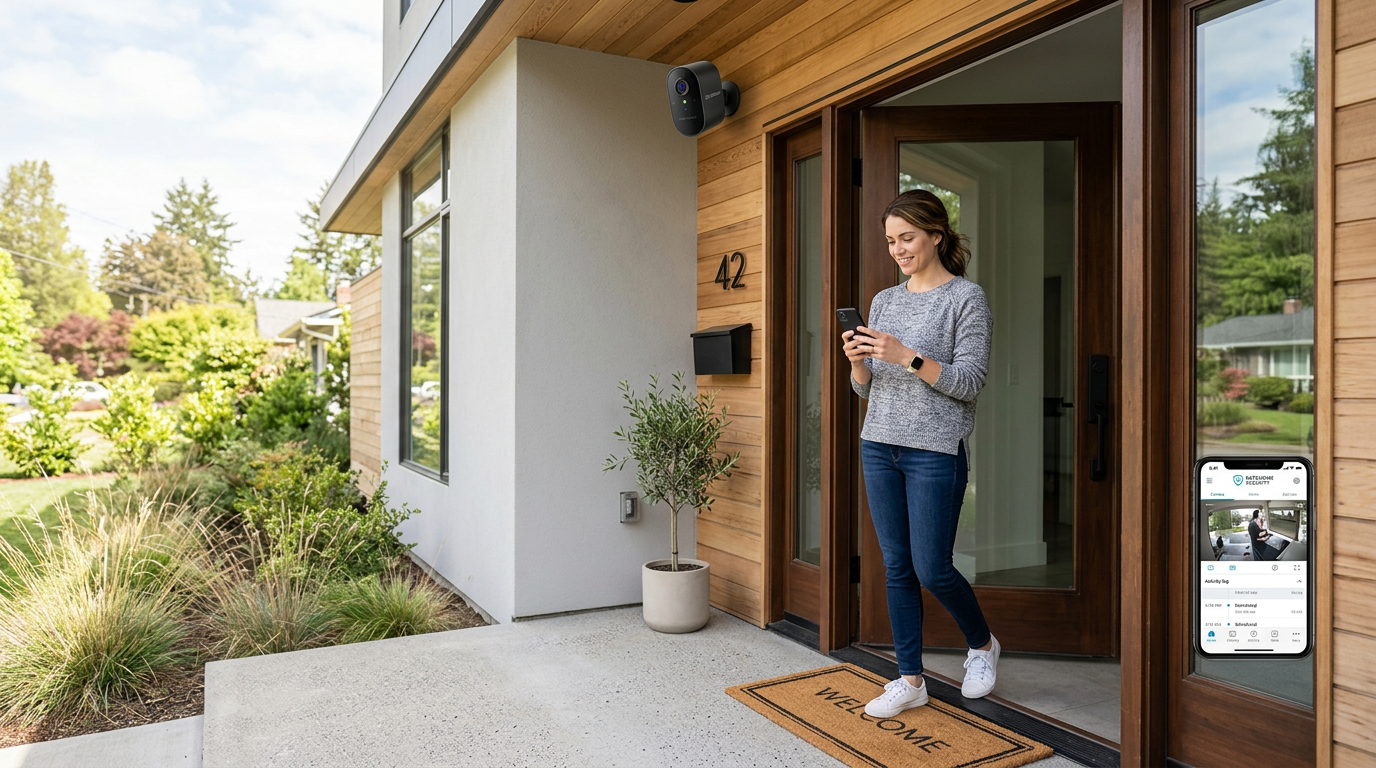
- Do you rent or own? Renters often need portable equipment and adhesive mounts that won’t damage walls
- Do you travel often? Frequent travelers may value professional monitoring and camera access from a phone app
- Do you have pets? Motion sensors and indoor cameras should be placed with pets in mind
Choosing a home security system is less about finding the “best” brand and more about finding the setup that matches your home, your routine, and how hands-on you want to be. Some people want simple app alerts and door sensors.
Others want professional monitoring, camera coverage, and backup protection if they’re away from home often.
→ Your Homes Connection — Contractor Marketplace — free, takes about 60 seconds.
If you’re comparing options for the first time, the number of features can feel overwhelming. The good news is that most systems become much easier to evaluate once you focus on a few practical questions: What are you trying to protect?
How do you want alerts delivered? Do you want to install it yourself or have it professionally installed? Answering those questions first can save time and help you avoid paying for extras you may never use.
Start with the way you live, not the equipment list
The most useful home security system is the one you’ll actually use consistently. Before comparing door sensors, cameras, and sirens, think through your daily habits.
- Do you rent or own? Renters often need portable equipment and adhesive mounts that won’t damage walls.
- Do you travel often? Frequent travelers may value professional monitoring and camera access from a phone app.
- Do you have pets? Motion sensors and indoor cameras should be placed with pets in mind.
- Do you want whole-home coverage or just a few entry points? A smaller apartment may only need a starter kit, while a larger home may need more sensors and cameras.
It also helps to think about your comfort level with technology. Some systems are designed for app-first users who want automation, voice assistant integration, and real-time notifications. Others keep things simple with basic alerts and a keypad.
Neither is better in every case; the right choice depends on how you prefer to manage your home.
→ See what you could be approved for — free, takes about 60 seconds.
Decide what kind of monitoring you want
One of the biggest decisions is whether to use self-monitoring or professional monitoring. The right answer depends on how quickly you want help if something happens and how much responsibility you want to take on yourself.
Self-monitoring
With self-monitoring, your system sends alerts to your phone or another device, and you decide what to do next. This can work well if you’re usually reachable and want to avoid a long-term service commitment.

No comments:
Post a Comment