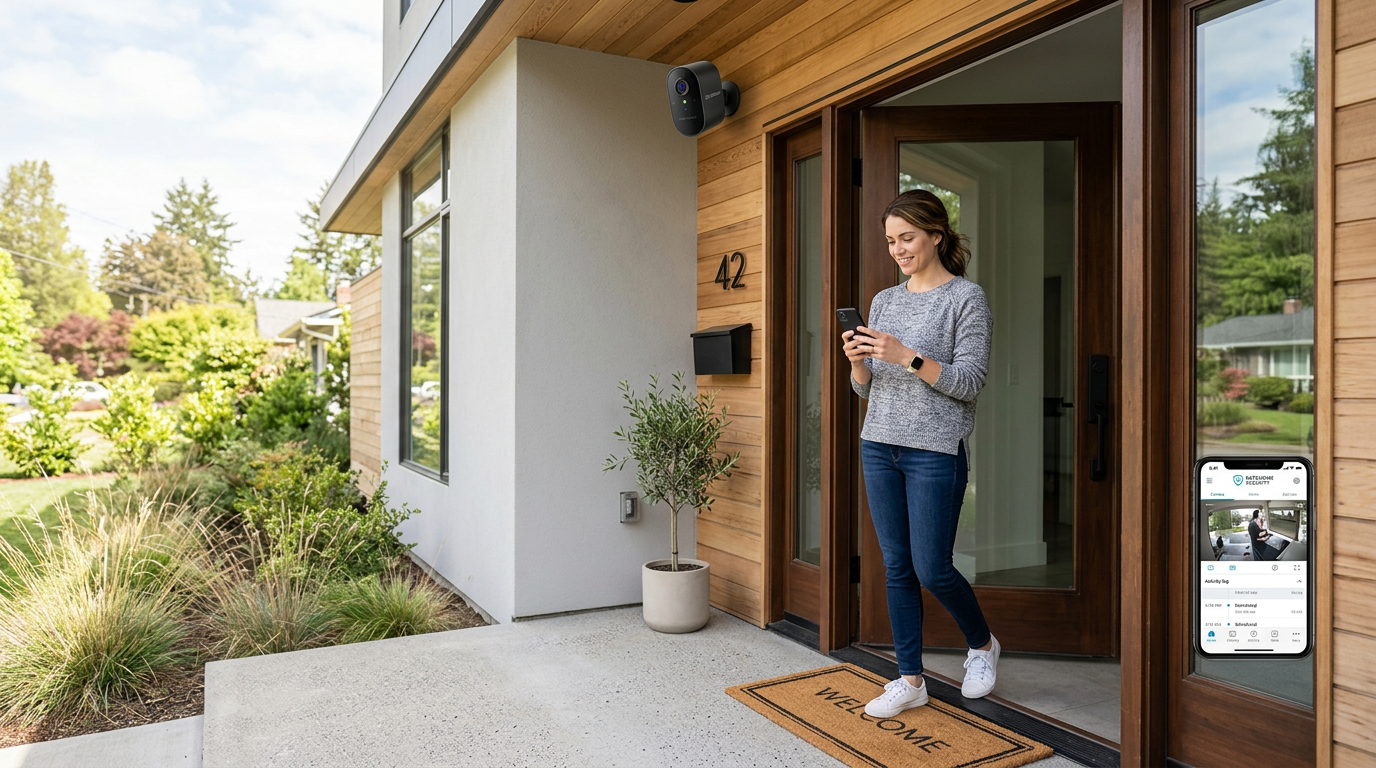
- Can you replace the existing deadbolt or add a smart lock?
- Are stick-on sensors or peel-and-stick cameras allowed?
- Can you add a door reinforcement plate or secondary lock?
Moving into a rental is the best time to think about security, because some of the easiest improvements are the ones you can plan before you unpack. For renters, the goal is usually not to make major changes to the property.
It is to reduce obvious vulnerabilities, understand what your lease allows, and choose security tools that can move with you later.
→ Your Homes Connection — Contractor Marketplace — free, takes about 60 seconds.
If you are signing a lease, touring an apartment, or getting ready for move-in day, a few practical checks can help you avoid surprises.
The right approach depends on the building, the neighborhood, and how much flexibility your landlord gives you, but a simple plan can go a long way.
Start with the lease and the landlord
Before you buy anything, read the lease for rules about locks, cameras, drilling, and window treatments. Some landlords allow minor upgrades if you return the unit to its original condition. Others have stricter limits, especially in buildings with shared entrances or managed security systems.
Ask clear questions early so you do not have to undo work later:
- Can you replace the existing deadbolt or add a smart lock?
- Are stick-on sensors or peel-and-stick cameras allowed?
- Can you add a door reinforcement plate or secondary lock?
- Are window alarms or contact sensors permitted?
It is also worth asking whether the landlord has changed locks between tenants. If you do not get a straightforward answer, make changing or rekeying the lock one of your first priorities if the lease allows it.
Inspect the door, frame, and windows before move-in
→ See what you could be approved for — free, takes about 60 seconds.
Many renter security problems start with weak entry points rather than missing gadgets. A solid front door is only part of the picture; the frame, strike plate, and hinges matter too.
During your walkthrough, test the doors and windows as if you were locking up for the night.
Look for these basic issues
- Doors that do not close cleanly or leave gaps
- Loose strike plates or short screws in the latch area
- Windows that are difficult to lock, open, or fully close
- Sliding doors that can lift off the track easily
If something looks worn or damaged, ask for a repair in writing before move-in. Even small fixes can improve peace of mind. For example, a better-fitting door or a functioning window lock is often more valuable than a complicated security app.

No comments:
Post a Comment