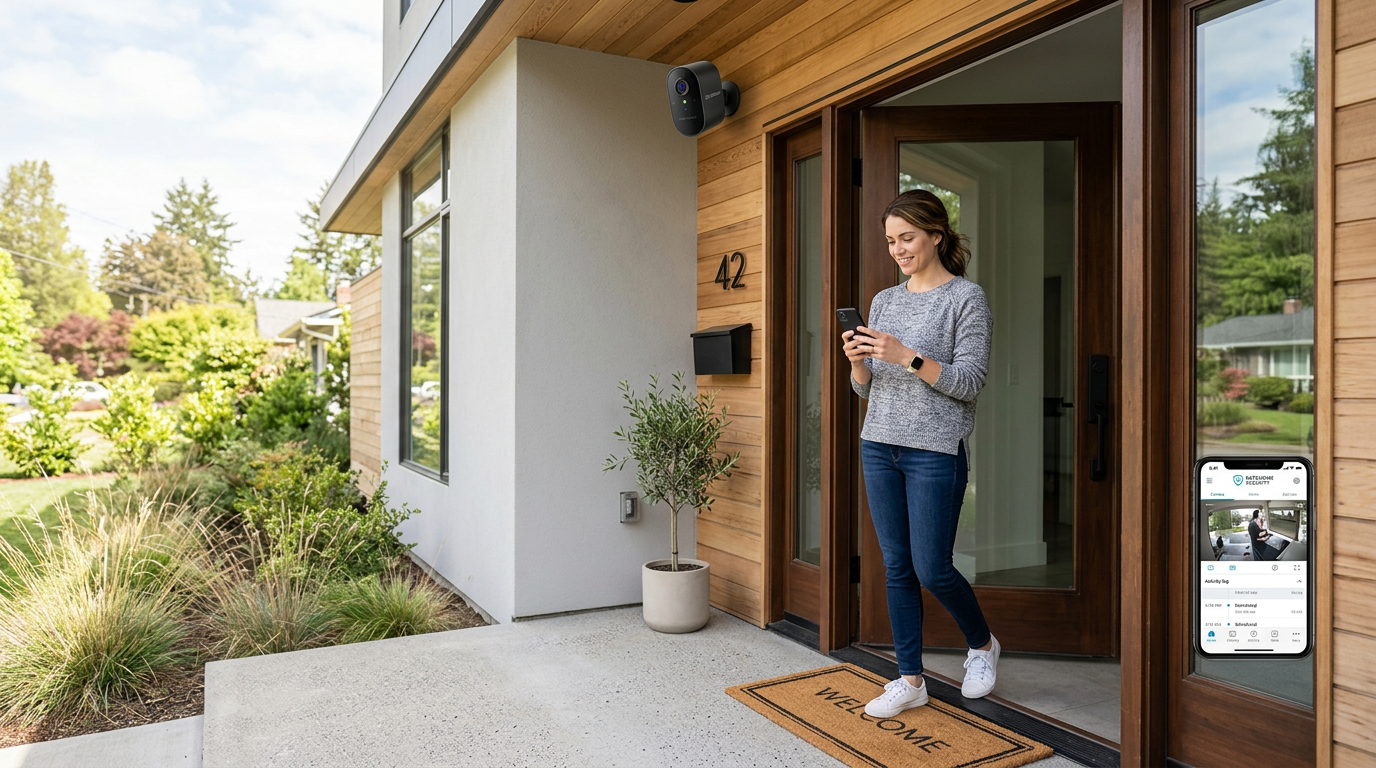
- Review app permissions before installing any connected home security device
- Look for strong password controls and two-factor authentication
- Check whether video is stored locally, in the cloud or both
New privacy concerns are changing how shoppers choose home security cameras
NEW YORK, N.Y. — August 13, 2026 — A growing number of consumers are paying closer attention to the privacy settings, app permissions and data-sharing policies behind home security systems, as connected doorbells, outdoor cameras and smart locks become more common in American homes.
→ Bark - Parental Controls for Families - CPS (US,AU,ZA,GU) — free, takes about 60 seconds.
What is driving the shift is not just the desire for stronger protection, but a sharper focus on who can access video footage, how long it is stored and whether cloud-based features are worth the tradeoffs.
Consumer advocates say the questions are especially important as homeowners add more devices to protect front doors, garages and package deliveries.
Home security brands continue to market convenience, remote monitoring and instant alerts. But buyers are increasingly comparing products on more than hardware alone. They are asking whether a camera offers local storage, two-factor authentication, customizable motion zones and transparent privacy controls before installation.
Industry Analyst said the new consumer mindset reflects a broader reality: the home security market is no longer just about alarms and sirens.
That concern is gaining traction as more households use multiple connected devices that may share one login or feed into the same mobile app. Industry watchers say the risk is not limited to device quality.
Weak passwords, default sharing settings and overlooked permissions can create vulnerabilities even when the equipment is new.
Experts also say seasonal buying patterns are contributing to the conversation. As families travel, move into new homes or prepare for holiday package deliveries, many upgrade security systems without reviewing the fine print.
→ See what you could be approved for — free, takes about 60 seconds.
The result is a surge in interest around setup guides, privacy dashboards and account security basics.
Consumers considering a new home security system are encouraged to look for products that make privacy settings easy to find, explain data retention clearly and offer ways to limit access to household members.
Homeowners should also check whether recordings are stored locally, in the cloud or both, and whether optional features can be turned off.
For shoppers comparing systems, the lesson is simple: a camera that records more is not always a camera that protects better. The most useful systems are often the ones that balance alerts, access and privacy without making the user navigate hidden menus or confusing defaults.
- Review app permissions before installing any connected home security device.
- Look for strong password controls and two-factor authentication.
- Check whether video is stored locally, in the cloud or both.
- Confirm who can access live feeds, recordings and shared alerts.

No comments:
Post a Comment