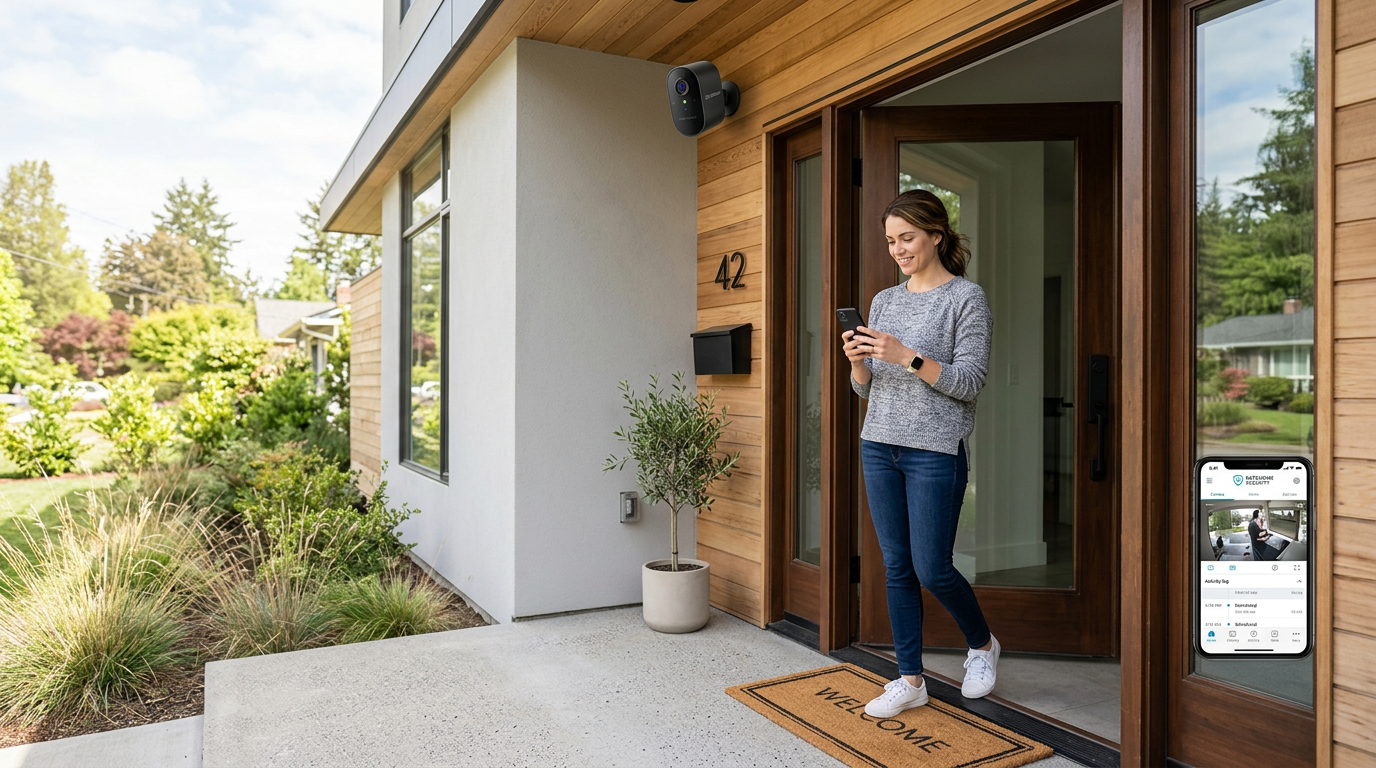
- Battery-powered sensors
- Peel-and-stick mounting options
- Wireless cameras
If you rent your home, choosing a security system can feel trickier than it should. You want real protection, but you also need something that respects your lease, won’t leave holes in the walls, and can move with you when you do.
The good news is that renters have more practical options than ever, especially if you focus on systems that are wireless, portable, and easy to install.
→ Bark - Parental Controls for Families - CPS (US,AU,ZA,GU) — free, takes about 60 seconds.
The best setup for a rental is usually the one that matches your space, your routine, and your landlord’s rules.
Before you shop, it helps to think beyond brand names and look closely at the type of equipment, the installation method, and how much of the system you can take with you later.
Start with your lease and your landlord’s rules
Before buying anything, check what your lease says about modifications, drilling, adhesives, and window sensors. Some landlords are fine with removable equipment, while others want written approval for anything that attaches to walls, doors, or trim.
If you are unsure, ask a direct question: Can I use removable security devices, and are there any restrictions on cameras, sensors, or entry keypad placement? A short email creates a paper trail and can prevent disputes later.
For many renters, the safest route is a system that uses:
- Battery-powered sensors
- Peel-and-stick mounting options
- Wireless cameras
- A base station that plugs into a standard outlet
That combination usually avoids permanent changes while still covering the most common entry points.
→ See what you could be approved for — free, takes about 60 seconds.
Choose equipment that fits your floor plan
A studio apartment, a townhouse, and a two-bedroom unit do not need the same setup. Think about how someone would enter your home and where you can realistically place devices.
Focus on the main entry points
Most renters do not need to cover every possible corner right away. A practical starter system often includes the front door, a back door if you have one, and the most accessible windows.
If you live on a higher floor, window access may matter less than common-area entry, balcony access, or package theft near your door.

No comments:
Post a Comment